

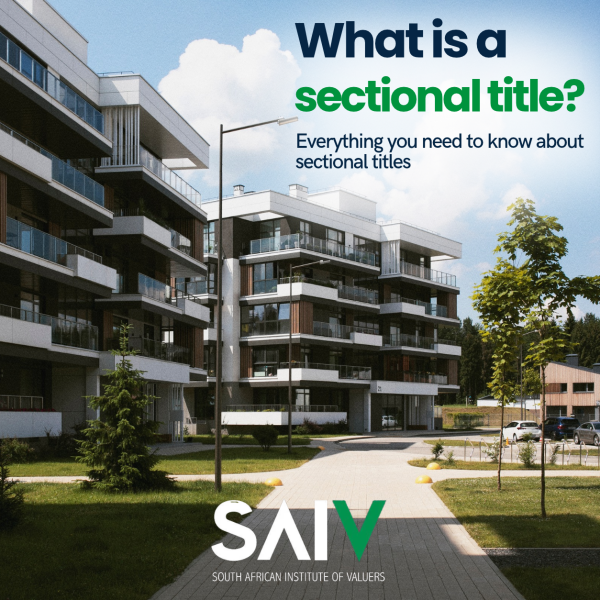
Buying a flat or townhouse often comes with questions about ownership, maintenance and shared costs. Who owns the roof? Can the body corporate tell you what to do inside your home? And who pays when something breaks?
In this educational Q&A, seasoned Property Valuer Dave Furness explains five important things the public should know about sectional-title ownership, helping current and prospective property owners better understand their rights and responsibilities.
-
What is sectional title?
Sectional title allows you to own an individual unit, such as a flat or townhouse, while sharing certain areas of the property with other owners. These shared areas are known as common property.
Owners contribute towards shared costs, which may include maintenance, insurance and security. However, they must also follow the rules that apply to their scheme.
-
Who actually owns the roof, walls and garden in a sectional-title scheme?
You own your individual section, but areas such as roofs, foundations and shared spaces generally form part of the common property.
A garden or patio may be reserved for your exclusive use without being privately owned by you. The sectional plan and scheme rules help determine what belongs to your section and what is shared.
-
Can the body corporate tell you what you can and cannot do inside your own unit?
Yes, certain restrictions may apply. While cosmetic changes are generally less complicated, structural alterations may require approval from the body corporate and the municipality.
Before renovating or making additions, check the scheme rules and establish which approvals are needed. Changes can also affect the building’s plans and levy contributions.
-
Who pays when something goes wrong: the owner or the body corporate?
It depends on whether the item forms part of your individual unit or the common property.
Owners are generally responsible for items within their sections, such as cupboards, basins and internal fittings. The body corporate generally manages common property, including elements such as roofs and foundations.
The exact responsibility depends on the circumstances and the scheme’s rules, so it is important to check before assuming who must pay.
-
Can you be forced to pay a special levy even if you disagree with it?
A special levy may be raised when a scheme needs additional money for major repairs, upgrades or unexpected expenses.
Even if you disagree with the decision, you may still be required to pay a validly imposed levy. The applicable rules and legal requirements determine whether it is payable. Owners should clarify their obligations with the body corporate or managing agent rather than simply refusing payment.
Good maintenance and financial planning can also help schemes prepare for future expenses and reduce unexpected costs.
Sectional titles can make property ownership more accessible, but it comes with shared responsibilities. Understanding what you own, what you share and which costs you may need to cover can help you make more informed decisions as a buyer or property owner.
Through this interview, Dave Furness helps make sectional titles easier to understand, because knowing your property rights starts with knowing how ownership works.